

Rhode’s “Glazed” Takeover: The New Generation of Bieber-Fever
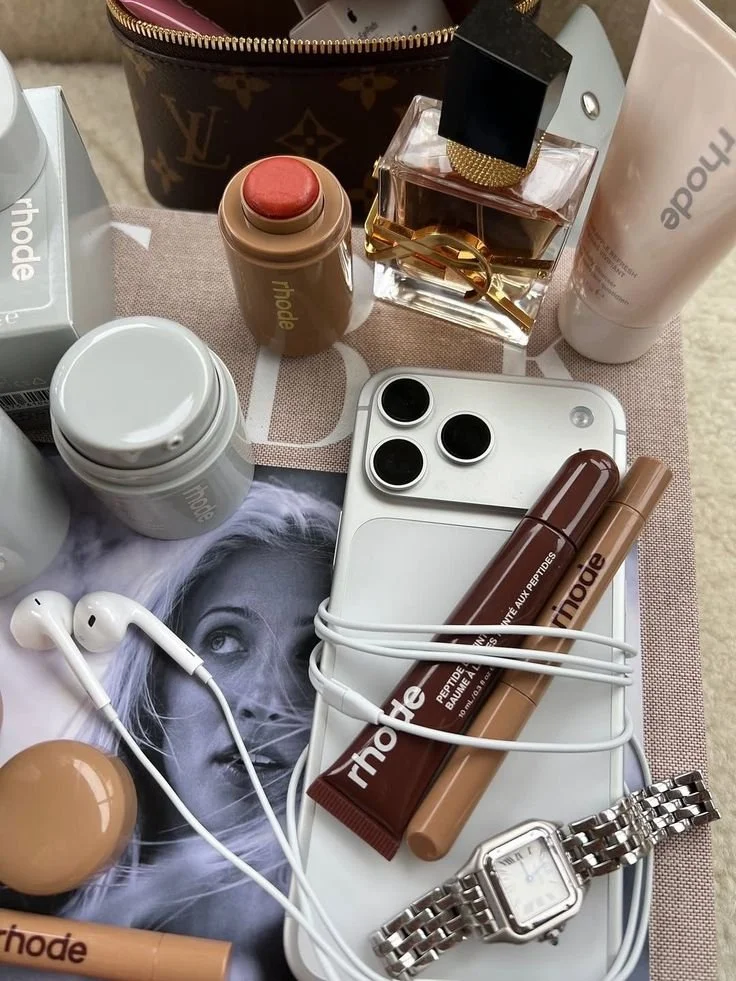
This version of Bieber fever doesn’t scream; it sells. And at the center of it is Rhode, a three-year-old beauty brand that somehow started moving like a legacy giant almost overnight. What began as a celebrity skincare launch has evolved into a case study in modern branding, influencer-led marketing, and cultural precision. This blog explores how Rhode leveraged identity, restraint, and internet fluency to transform hype into staying power and why its success says more about strategy than about celebrity.
If you blinked anytime in the last year, you probably missed the exact moment Rhode stopped being “Hailey Bieber’s skincare line” and became an actual force. One of those brands that doesn’t just sell products, it sells a look, a mood, and a very specific kind of bathroom-counter aesthetic.
And the numbers back up the hype. In the 12 months ending March 31, 2025, Rhode reported $212 million in net sales, a figure that makes bigger companies start circling like sharks in sleek black blazers. Then, in May 2025, e.l.f. Beauty announced it was acquiring Rhode in a deal valued at up to $1 billion.
So what happened here? How did a brand that launched in 2022 end up selling for a billion dollars before it even got its first Sephora gondola?
The product strategy: fewer launches, bigger moments
Rhode’s product lineup has never tried to be everything to everyone. It’s curated, tight, and almost annoyingly controlled in a way that—ironically—makes people want it more. When brands launch too many products at once, nothing feels special. Rhode did the opposite: fewer SKUs, more obsession.
This is where “drop culture” (borrowed from streetwear, perfected by beauty) becomes a business strategy. Rhode’s launches operate like events. People don’t just buy the product—they try to catch it before it sells out. That urgency turns shopping into a sport, and the internet loves nothing more than a competitive hobby that also empties your wallet.
The key is that scarcity doesn’t work unless demand is real. Rhode created demand by making hero products that are easy to understand and easy to demonstrate on camera. A peptide lip treatment isn’t abstract. You can see it. You can watch it shine. You can immediately imagine it in your bag. It is, essentially, a product built for close-up video.
The marketing strategy: Hailey didn’t “front” the brand—she is the content engine
Many celebrity brands treat the founder like a billboard: a few polished ads, a couple of red carpet mentions, call it a day. Rhode treats Hailey like a full-time media channel.
She doesn’t just appear in campaigns—she’s the narrator. Rhode’s success is tied to the fact that the founder already had a believable beauty identity. Hailey didn’t have to convince anyone she cared about skincare. She had been building “glazed donut skin” as her signature long before Rhode, which meant the brand felt like a natural extension instead of a random business project. When you sell a product that matches your existing public persona, it doesn’t read as “cash grab.” It reads as “finally.”
And the content isn’t trying too hard to be funny-brand-on-Twitter. It’s clean, minimal, and tutorial-driven. Rhode doesn’t yell. It whispers. It’s the marketing equivalent of someone who speaks softly and still somehow gets everyone’s attention.
The distribution strategy: DTC first, then Sephora—aka the “hype first, scale second” blueprint
Rhode spent its early growth years primarily direct-to-consumer, which helped it do two things at once: maintain control of the brand experience and build that “exclusive, hard-to-get” feeling.
But the real genius move is knowing when to stop being precious.
In 2025, Rhode made the jump into retail with Sephora in the U.S. and Canada, starting September 4, 2025, with plans to roll out to the U.K. afterward. This was Rhode’s first major retail partnership, and it’s a classic scale move: once your demand is proven online, you expand access and let Sephora do what Sephora does best, which is turn “I’ve been influenced” into “I’m already holding the bag.”
Vogue framed the Sephora partnership as a turning point in Rhode’s evolution from a DTC, founder-led cultural object into a more durable retail brand, while noting the challenge will be maintaining cachet once it’s no longer “hard to get.”
The social strategy: earned media as the real KPI
Rhode’s marketing machine runs on what the internet voluntarily does for it. People film “what’s in my bag” and the Rhode tube is there. People do GRWMs and Rhode is on the counter. People flex the packaging like it’s jewelry. That’s not paid media—that’s social proof.
Vogue reported Rhode generated $248 million in earned media value in 2024, driven largely by Hailey’s reach and the brand’s viral momentum. Earned media value isn’t perfect as a metric (it’s an estimate, not cash in the bank), but it’s still a strong signal of cultural dominance—especially in beauty, where attention often predicts sales.
Rhode’s playbook is basically: make the product photogenic, make the vibe consistent, make the founder the main character, and let the audience do the amplification because it makes them look cool.
The business strategy: the e.l.f. deal didn’t happen because Rhode is cute—it happened because it’s scalable
That $1B acquisition headline wasn’t just celebrity sparkle. It was a strategic match. e.l.f. is a machine at scaling viral, internet-first beauty, and Rhode arrived with something e.l.f. doesn’t naturally own: a prestige-coded, minimalist brand with founder-driven cultural heat.
AP reported that the deal structure included $600 million in cash and $200 million in stock, plus up to $200 million in performance-based payments over the next three years, and noted that Hailey would remain involved as chief creative officer and head of innovation. In other words, Rhode wasn’t being absorbed; it was being preserved and scaled.
The real reason Rhode worked: it sells identity, not just skincare
Here’s the simplest explanation, and also the most annoying one: Rhode makes people feel like they can buy a version of “effortless.” Not the sweaty kind of effortless, where you’re actually doing the most. The kind where your skin looks expensive, your routine looks simple, and your life looks calm.
Rhode didn’t win because it invented skincare. It won because it packaged a very specific modern beauty fantasy: clean, glowy, minimal, put-together, and made it feel attainable. Then it layered in scarcity, viral-ready products, founder-led storytelling, and a smart retail expansion timeline.
Rhode is the blueprint for the new era: start as culture, prove demand with data, then scale like a corporation without losing the vibe that made people care in the first place.
If you want, I can write a second brand story in this same format but for a fashion brand (not beauty) that had a standout 2025/early-2026, and compare their marketing playbooks side-by-side.
The UnFold take:
Rhode didn’t win because it reinvented skincare. It won because it understood modern desire.
People aren’t just buying lip treatments or serums; they’re buying calm, minimalism, and the illusion of effortless beauty in a chaotic internet age. Rhode packaged that fantasy perfectly, then backed it up with smart product design, disciplined launches, founder-led storytelling, and impeccable timing.
The real lesson for brands isn’t “get a celebrity.” It’s this: build culture first, prove demand second, and only scale when the audience is already asking for more.
Rhode didn’t chase attention. It made itself worth looking at and let the internet do the rest.
I bought the Peptide Lip Tint in the shade PBJ purely to see what all the hype was about. No deep product research. No ingredient comparison. Just vibes. And honestly? Every time I pull it out of my purse, I feel… cool. Like the effortless, put-together version of myself that Rhode has spent years convincing me I could be. Is it the best lip gloss I’ve ever used? Probably not. But is it glossy, comfortable, flattering, and chic enough that I want to be seen using it? Absolutely. And that’s the point.
What Rhode has mastered isn’t just product quality, it’s perception. Rhode sells the experience of taste. The packaging, the shade names, and the association with Hailey’s already-established “glazed” aesthetic all work together to make the product feel elevated before it ever touches your lips. I didn’t just buy a lip tint; I bought into the fantasy of minimal effort, clean beauty, and quiet luxury. And I was happy to do it.
I genuinely commend Bieber and the Rhode team for how intelligently they’ve played the long game. They understood that in today’s market, people don’t just want good products—they want products that say something about them. And of course, it’s refreshing (and motivating) to watch a powerful businesswoman turn personal branding into a billion-dollar blueprint. If being influenced looks like this, I fear I’m happily guilty.
Thank you for reading!
With love,
Avery Fritsch
Author of UnFold